
The Grayson County Current Owner Record
The assessor describes its real-estate record as a rich one. It covers ownership and property location. Legal description, transfer information, and improvements are included too. A building sketch rounds out the list. Treat that list as a reading guide. The public description does not name a sample card or exact web labels. Screen order may vary as a result. The listed owner is simply the name on the county roll. For a recent transfer, the latest deed is the recorded instrument. Check it against that roll entry.
| Owner of record | Name associated with the parcel in the assessor listing |
|---|---|
| Legal description | Land description to compare with the deed |
| Property location | Situs or location field described by the assessor |
| Mailing address | Tax notice destination; exact public display not documented |
| Transfer information | Assessor says transfer details are part of its record |
| Improvements / sketch | Building and improvement context, not a boundary survey |
The Grayson County Real Estate Office describes its ownership listings and tax-map services.
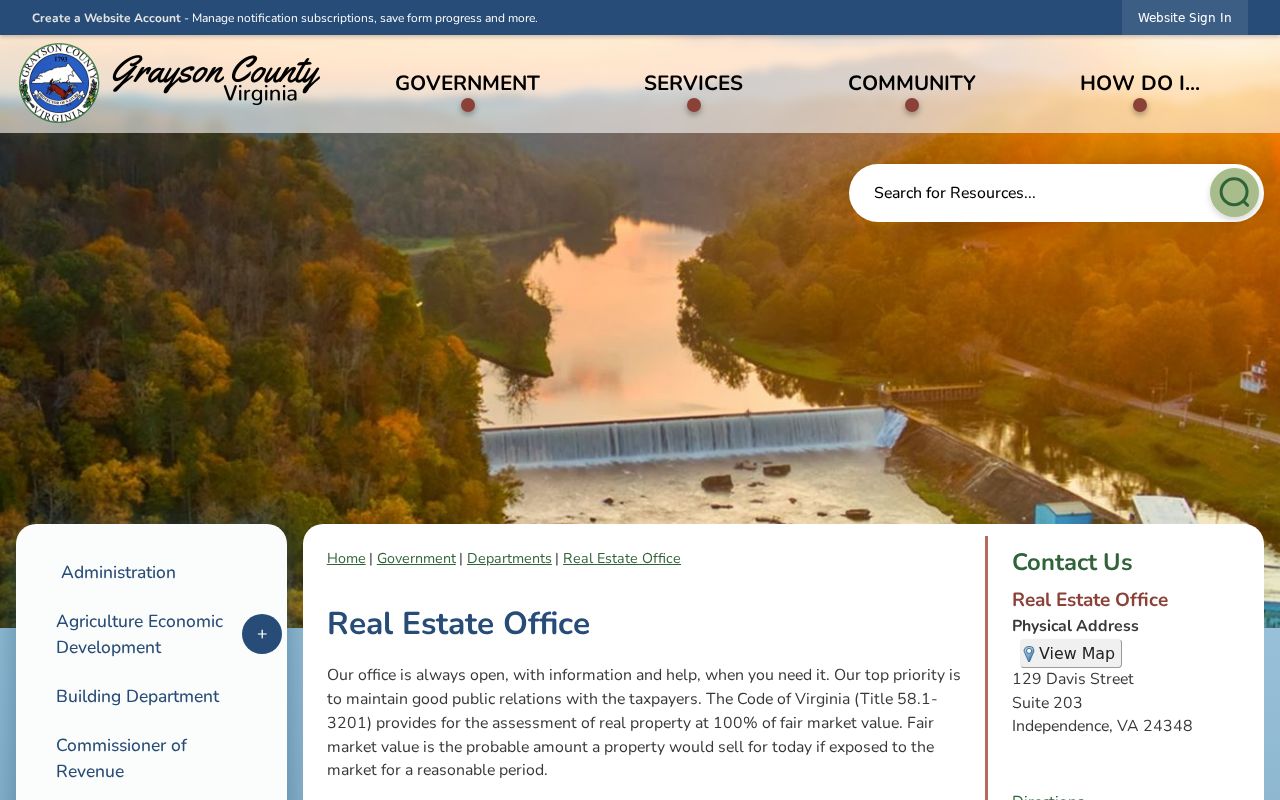
The Real Estate Office holds Grayson County's current owner record. Start there. A parcel number and legal description come with the listing. Carry both clues to the clerk's deed records.
The assessor's alphabetical and numerical owner listings are confirmed office services. No searchable public web form exists. Grayson County also links the Virginia Mass Appraisal Network. It is a fee-based subscription with no published price or stated historic depth. For a current owner check, ask the Real Estate Office. Ask whether the roll reflects a recently recorded transfer. Note the date of that answer. The roll and the clerk's deed index serve separate purposes. Neither mirrors the other in real time.
Reassessment runs on its own clock. Grayson County's six-year reassessment was completed in 2021 and took effect January 1, 2022. Data gathering is planned for 2027, feeding the 2028 tax year. The county publishes no transfer-to-roll interval. A cycle date cannot say whether last week's recorded sale has reached the current owner field.
The owner of record may be a trust, a company, an estate, or several people. A mailing address is where tax notices go. It is not proof of residence. The record names no occupant. It cannot confirm that a recent closing has reached every county system.
Verifying the Grayson County Current Owner
Two offices hold the answer. Use them together. The assessor and the Circuit Court Clerk each cover a different half of a Grayson County property search. The clerk's grantor-grantee index points to a recorded transfer. Virginia SRA may provide free index-only access when a clerk enables it, while images require a subscription that clerk authorizes. Grayson County's page says land records are available online by paid subscription, without a current price or a stated earliest year for the web index. The dynamic search fields are not exposed.
- Locate the parcel in the assessor's ownership information and copy its legal description.
- Search the newest deed using the party names or parcel clue and confirm the grantee.
- Compare the instrument description with the assessor parcel, including any fiduciary or entity name.
- Ask the clerk for an image or certified copy if remote access is limited.
- Owner of record
- The name the public property record associates with the parcel.
- Vesting
- The way an interest is held, such as by an individual, fiduciary, or entity named in a deed.
- Registered agent
- A contact listed in an entity filing, not proof of land ownership by that person.
Contact Clues in the Grayson County Owner of Record
An assessor's record can separate a property's location from its mailing address. The mailing field serves tax notices. It is not a residence indicator. It also cannot confirm who occupies a building, so do not infer personal details from a tax address. Confidentiality limits, exemptions, and court-sealed material remain closed.
Lawful use. Use a public mailing address only for a legitimate property purpose. Do not use owner information to track, threaten, or harass anyone.
Why the Grayson County Current Owner Can Lag a Deed
A deed and an owner listing serve different tasks. The clerk preserves the instrument. The assessor maintains the real-estate roll. No published interval governs how fast a newly recorded deed reaches the tax-card owner field. When records disagree after a closing, compare recording dates and legal descriptions before calling either name a mistake. Ask the clerk whether the deed was recorded, and the assessor whether the roll reflects it.
The current tax bill and the GIS display do not sync with the deed index. The Treasurer's account, map, and assessment are separate views. Treat each source separately. Record the date on each source whenever you write a present-tense ownership note.
Grayson County Current Owner Mailing Address and Situs
A situs address tells you where the land sits. A mailing address tells the county where to send the tax bill. The two often diverge for rural parcels, absentee owners, post-office boxes, trusts, and estate representatives. Grayson County cautions that a postal town name may not match the parcel's true municipality. An Independence 24348 mailing address, for example, can belong to property well outside the town. Want to pinpoint where a parcel actually lies? WebGIS and the legal description beat the street address every time.
The split matters for zoning too. Fries, Independence, and Troutdale each run their own town zoning. The county handles unincorporated land. The County Building Department issues permits inside every town. Its public page, however, offers no confirmed search fields or coverage dates for a permit-history lookup.
Estate, Trust, and Company Names on a Grayson County Deed
An estate transfer can leave a name gap. The newest deed may show a fiduciary while the tax card still carries the decedent. Grayson County's Circuit Court Clerk keeps wills, probate filings, and estate qualifications. Local materials report those records reach back to the county's formation. A Grayson County deed may run from an executor or administrator. Pull the will or fiduciary file as well. The transfer may pass to heirs. It may also pass to a trustee or straight to a new owner of record.
Trustee, executor, estate, and individual names serve as separate leads. Each one works in the deed records index. The portal's exact indexing convention is not published. Ask the clerk when names refuse to line up. A company owner raises one more step. Virginia SCC CIS lists entity filings and a registered agent. That record is useful context. It still cannot replace the land deed itself. The deed remains the controlling document in the Grayson County property records.
Watch New Grayson County Filings with VADeed Alert
Virginia VADeed Alert is free and voluntary. An owner enrolls a name or a Tax Map and Parcel ID. When certain recorded documents match, the system sends an email alert. Treat each notice as a prompt, nothing more. An alert is not a title search. It is not a guarantee that every instrument triggers a notice. And it is not a finding of fraud. It simply tells you which filing to inspect in the clerk's deed records.
File the alert's parcel reference beside the tax card and the latest deed. If a notice looks unfamiliar, compare party names. Compare the legal description against the land record. Then contact the Circuit Court Clerk before answering any private solicitation. Virginia's VADeed Alert page gives access to voluntary sign-up.
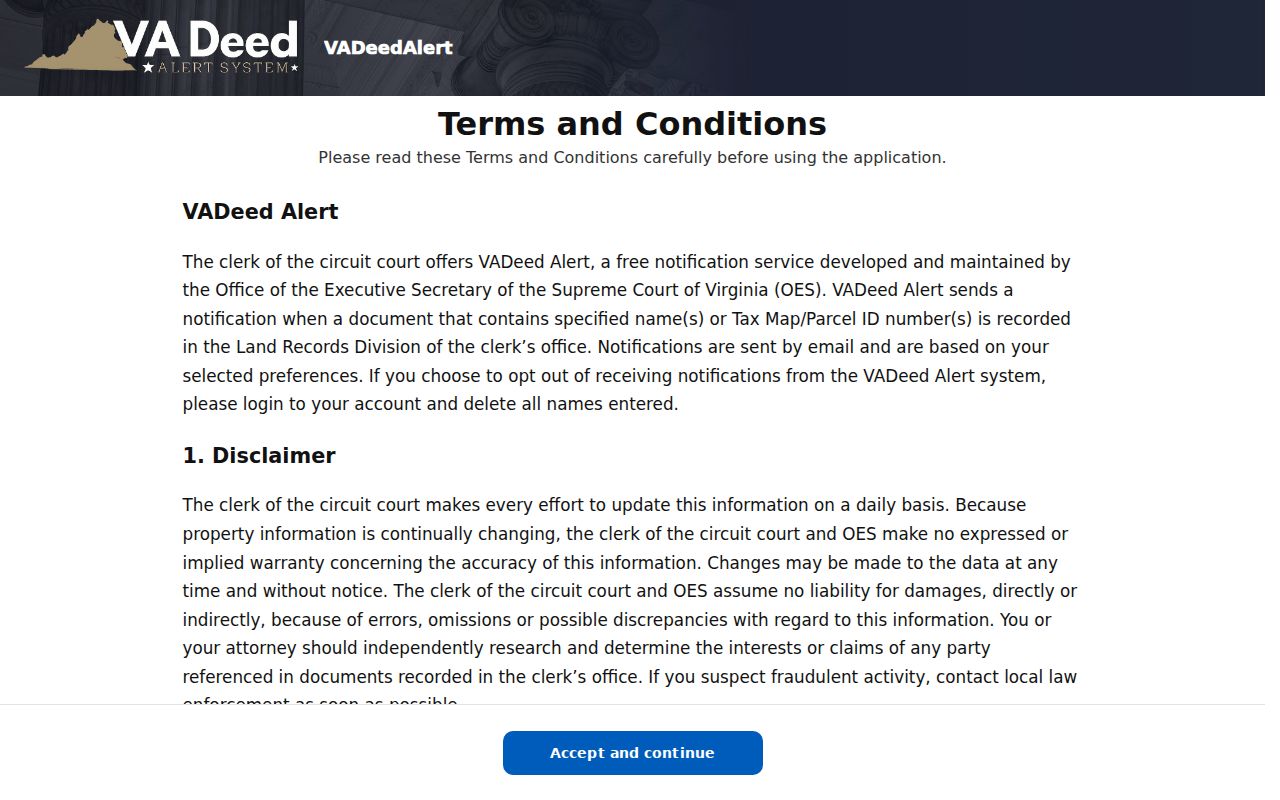
Let the alert point you toward the official record to review, never treat it as proof of an owner's title status.
What the Current Grayson County Owner Field Cannot Prove
The owner on a Grayson County tax card is a label, not a verdict. It says nothing certain about possession, family interests, unrecorded agreements, or title defects. It may lag a recent closing or miss a probate transfer entirely. A deed's grantee is only a party to that one instrument. The full chain may demand earlier deeds, releases, judgments, probate files, and related instruments in the Grayson County property records. Nor can a tax map or WebGIS line settle a boundary dispute.
For current ownership, weigh dates, names, and legal descriptions. Use both the assessor and clerk records. For prior owners, walk backward from the latest deed into the archival material. For legal title, get a professional review.